Five constitutional types describe how people are built.
From Elsie Lincoln Benedict's 1921 work, modernised. The body is the index of the temperament. The shape suggests the orientation.
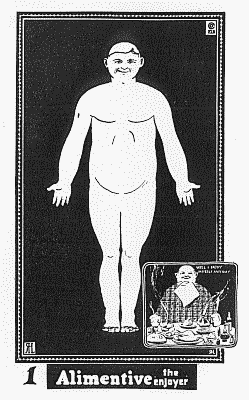
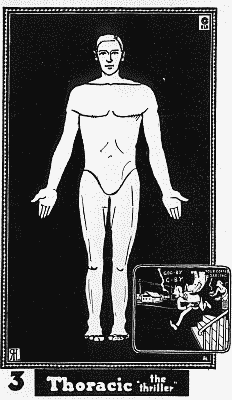
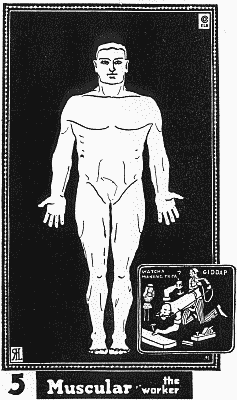
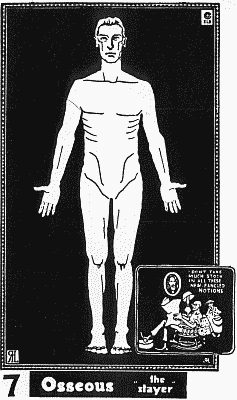
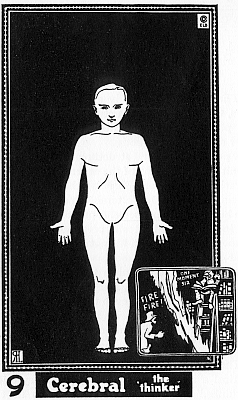
The framework descends from a 1921 work of constitutional psychology by Elsie Lincoln Benedict, modernised, stripped of the parts that did not survive a century of scrutiny, and put on contemporary biological footing. It describes five orientations, each named for a body system and each pointing at a recognisable shape of attention.
The point is not to predict what people will do. The point is to notice, more carefully, what they are oriented toward. Held lightly, the framework gives a working vocabulary for the kind of difference between people that is otherwise inarticulate.
Most people are dominantly one type and secondarily another. The forty-question assessment identifies both, with a confidence band, and produces a shareable URL.
-
Pick two types, read the pair
Pick yourself, pick the other; read where the pair works, where it grates, and how it tends to settle over decades.
-
Match type to work
Each type's vocations, modernised from Benedict's Chapter VII. By type, or alphabetical by trade.
-
Each type as a partner
What each type asks for, what it gives, and the failure mode worth naming. Modernised from Chapter VI.
-
The values framework
Eight values, ranked differently by each type. The crib for why two reasonable people use the same word for two different verbs.
-
Read the framework
The five-type structure, the dominant-secondary blending, what the framework claims and what it does not.
-
See the limits
Where the framework breaks down. Determinism is overstated, empirical validation is sparse, within-type variation is large.