Circulatory
The ThrillerAdaeze walks into the room and the room knows about it. Not because she has done anything in particular — she has not, yet — but because something in the metabolism of the room has shifted half a degree, the way a room shifts when the front door opens onto cold weather. She is wearing a coat she found in a market in Lagos last year, the kind that costs nothing if you know where to look and a great deal if you don’t. By the time she has taken the coat off she has identified the two most interesting people present, found a sparkling water, and started a conversation that the other forty-eight people in the room will, by the end of the evening, wish they had been part of.
By Tuesday morning she has flown to Vienna, talked her way into a meeting with a contact she met once in 2019, sketched out the rough shape of a deal that may or may not happen, and decided over a coffee that the deal is less interesting than the next one already forming in her head. She will keep the contact. The contact will be useful in three years, in a way neither of them can currently see. Nothing about her week looks plannable from outside. From inside, it is in fact entirely intentional.
What the type orients toward
The Circulatory orients toward stimulus, novelty, and the live moment. They are the people who walk into a room and the temperature rises by half a degree. Their working assumption about a day is that the day is going well if something interesting is happening, and not going well if nothing is. Interesting is a serious technical category for them. It is the metric by which they assess most situations within the first two minutes.
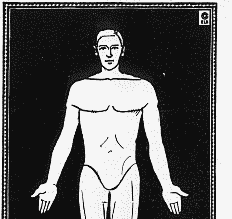
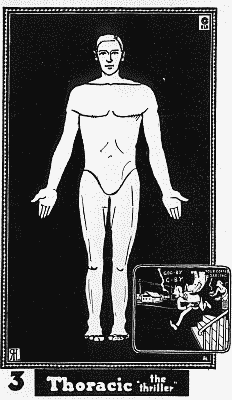
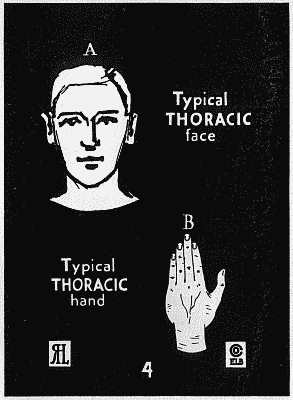
In the older constitutional language, this type was Sheldon’s somatotonic-extrovert, Benedict’s thoracic. The premise was that a person whose constitutional weight ran along the cardiovascular system would orient toward problems handled by quick metabolism — energy, motion, persuasion — and away from problems handled by patience or quiet reflection. The premise has not aged into a scientific theory. The pattern, however, is real and observable in any social setting, and survives translation. The Circulatory is the friend who organises every weekend; the colleague who is always the public face of the project; the founder whose pitch makes the room lean forward; the relative who has lived in five countries and is restless about the sixth.
Recognising the type
Watch for energy. The Circulatory radiates it. They lean forward. They make eye contact early. They laugh, often. They stand closer than other types do, but in a way that does not register as crowding because they are warm and quick. They are the first to suggest the next thing, and the next thing tends to be more interesting than what was originally on offer.
Linguistic markers. They are, on average, the most charismatic talkers in the room, but the charisma is not performance, exactly — it is metabolism. They use the present tense and the future tense more than the past. They use the names of places casually — when I was in Mexico, the people I met in Tokyo — not to impress, but because the geographies are part of the inventory of their week. They speak in stories. They make you laugh inside of three minutes.
Behavioural markers. They start things. They are unusually good at starting things. They are not always so good at the late, slow, unglamorous part of the things they have started, which is partly why they are so often in partnerships with Muscular or Skeletal types who finish what the Circulatory has begun. They recover from setbacks faster than other types do — the next thing absorbs the last. They know, casually, an enormous number of people, and remember enough about each of them to be useful when called upon.
Environmental markers. Active. The Circulatory’s space is not curated for stillness. There is colour. There is sound. There are objects that record things that have happened — concert tickets, postcards, a film camera, a guitar with a story attached. They love good light, particularly windows and good speakers. They tend to be somewhere central, somewhere walkable, somewhere with options.
III · StrengthsWhat the type does well
High-bandwidth charisma. People remember meeting them. This is not a small thing. In any working life that requires moving people — sales, fundraising, advocacy, founding-stage anything — the ability to make the next person on the call lean in is a genuine economic asset. The Circulatory has it without trying.
The ability to find energy in places others find tedium. The Circulatory can make a Tuesday afternoon meeting interesting, because they are interested. They generate liveliness as a by-product of being themselves. This is unevenly appreciated; it is also, in many institutions, the difference between a project that gets done and one that quietly ends.
Risk tolerance. The Circulatory takes shots that other types do not take. Some of the shots miss; some of them are the only reason any non-trivial thing in their orbit ever happens. They are particularly valuable in early-stage anything: founding teams, new initiatives, expansions into unfamiliar territory.
Persuasive in person. Not because they argue well in the technical sense — sometimes they do, sometimes they don’t — but because they feel right. People believe them, and often act on the belief, before they have completed the rational analysis. This is dangerous in the wrong hands and powerful in the right ones.
Quick recovery from setbacks. The Circulatory falls down and gets up. They do not ruminate. The bad meeting is over by the next meeting. The collapsed deal is metabolised by Friday. They are unusually robust in the affective sense, and they spread that robustness to the people around them.
IV · VulnerabilitiesWhere the type fails
Restlessness that mistakes itself for ambition. The Circulatory who is bored often interprets the boredom as evidence that the current thing is not big enough. Sometimes this is right; sometimes the current thing is in fact the right thing, and would have rewarded patience. The Circulatory leaves before the reward arrives. Years later, looking back, they sometimes notice the pattern: the things they left were almost ready.
Difficulty with the late, slow, unglamorous part of any project. Where the Cerebral over-thinks the closing and the Muscular over-pushes it, the Circulatory tends to delegate it. This is sometimes appropriate. It is sometimes the project’s death warrant. Pure-Circulatory founders without operational partners burn through capital and goodwill in a particular shape that experienced investors learn to recognise.
Burning out the people around them. The Circulatory’s metabolism is not universal. The Skeletal partner, the Cerebral colleague, the Digestive friend — each of them runs on a different time signature, and the Circulatory’s pace can deplete them without the Circulatory noticing, because the Circulatory feels fine. The Circulatory who has been told three or four times by partners that I love you, but you have to slow down is being told something real.
Treating commitments as suggestions when something brighter appears. This is the failure mode that costs the Circulatory most in long relationships. The promise made in October is, by January, in competition with the new bright thing, and the new bright thing wins. The other person notices. The pattern, repeated, eats the relationship alive.
Self-soothing through stimulus. The Circulatory’s instinct, when stillness arrives uninvited, is to fill the stillness with something. A trip. A new project. A drink. A new person. The instinct is constitutional and essentially benign in moderation; it becomes a problem when the thing that needs to happen is, in fact, the stillness, and the Circulatory cannot stay in it long enough for the slow thing to be felt.
V · Vocational fitWhere the type thrives
Sales, frontline hospitality at scale, performance, journalism, founding-stage startups, anything live and high-tempo. Conferences. Television. Politics, particularly campaigning. Music. Front-of-house in any sense. Roles where being there in person is the point. Roles where the cycle is short and the audience is real.
They thrive in environments where energy is appreciated as energy, in roles that pay for charisma honestly, and with partners who are good at finishing what the Circulatory has started.
They suffer in roles that require quiet repeatable execution over months. They suffer in research environments that depend on long sustained solitude. They suffer in cultures that read brightness as superficiality, particularly the parts of academia and certain Northern European corporate cultures that prize the Skeletal register.
VI · Health patternsWhat the body does
Cardiovascular reactivity runs hot. The system that gives the type its name is also the system that pays the bill. Stress shows as racing thought, disturbed sleep, a faint tremor in the hands at the wrong time. The Circulatory under-reports tiredness because tiredness does not match their self-image; the body keeps the score regardless.
Movement is medicine; sitting still is not. The Circulatory who has been at a desk for ten hours has done themselves a particular kind of damage that does not show up until they cannot fall asleep that night. Disproportionately helped by aerobic exercise — the long run, the cycle, the weekly five-a-side — and disproportionately hurt by stimulants that mask the underlying fatigue. The Circulatory who lives on espresso has, on average, more bad meetings than the same Circulatory who has had four good nights of sleep.
Practical implications: daily aerobic discharge, taken seriously. Honest sleep, taken seriously. Caffeine and alcohol on the moderate end of the dial rather than the convenient one. Long-haul travel managed deliberately rather than serially. None of this is news to the Circulatory; the work is in the doing.
VII · ExamplesA few people who fit
- Bill Clinton — the Circulatory in political form. The build, the charisma, the energy in the room, the unfinishable list of contacts and hands shaken and stories remembered.
- Anthony Bourdain in the later television years. The travelling, the cracked-open warmth, the appetite for stimulus, the difficulty with stillness; the eventual cost of all of it.
- Hunter S. Thompson — the Circulatory writer in undiluted, unsustainable form. The energy, the appetite, the cost. Cautionary in a real way.
- Steve Jobs — Circulatory primary, with a strong Cerebral secondary. The triangular face and tapered build, the volcanic temper with fast recovery, the bursts-and-crashes metabolism, the persuasion-by-presence in the keynote. The design discipline is the Cerebral; the engine of the public life was Circulatory. Read in full on the Cerebral × Circulatory pair page.
How the type pairs
The Circulatory’s most productive blends are with the Cerebral (the public intellectual, the communicating researcher) and the Muscular (the athletic performer, the charismatic operator).
With the Cerebral, the Cerebral has the substance and the Circulatory has the room. Together, books get read, ideas travel, the conversation moves out of the seminar and into the world. Friction lives in pace.
With the Muscular, energy meets execution. Together, projects get started and finished. Friction when the Circulatory wants to start a third project before the Muscular has finished the first.
With the Digestive, warmth at scale — the host of the famous party, the hospitality magnate. Friction in pace and in the desire to leave.
With the Skeletal, the hardest natural pairing. Workable only when both parties have done individual work, and then, sometimes, a great pairing.
With another Circulatory, two Circulatories burn brightly. They also burn each other out, then go looking for the next bright thing.
IX · Where the framework breaks downHonest limits for this type in particular
Two cautions for the Circulatory in particular. First, extroversion as a personality trait is not the same as a Circulatory constitution. Many extroverts are something else; many Circulatories are quieter than the stereotype suggests. The framework describes a centre of gravity around stimulus and motion, not a level of social volume. There are quiet Circulatories — present, alive, unpredictable, slightly bored — and there are loud non-Circulatories of every other type.
Second, the older constitutional theories sometimes read this type as flighty, unreliable, vain. None of that is here. The Circulatory’s restlessness is not a moral defect; it is a constitutional feature. The world that has the type in it is, on average, a more interesting world than the world that does not. The vulnerabilities are real — see the section above — but they are not character flaws to be ashamed of. They are failure modes to be understood.
The framework as a whole has further limits. See Where this framework breaks down.