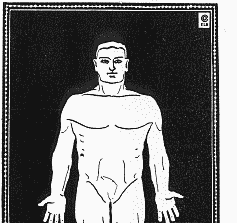
Muscular
The WorkerThe kitchen at the back of the restaurant was on fire at five past six on a Tuesday in February, in the small way a commercial kitchen is on fire — a pan, an extractor, oil up the sides — and Tomas had it out in under a minute, with one hand and the back of a wet cloth, while still finishing a pass of the line. He did not say much about it. He did say, twenty minutes later, that the extractor had needed cleaning for a fortnight and that he had told them this. Then he went back to the line. Service was on time. The fire was a small hard fact of the day, like the delivery being late on Thursday or the new commis not knowing how to set up the pass. It was something to handle. He handled it. The thing about Tomas is that he handles it.
What the type orients toward
The Muscular orients toward execution. They want to do the thing. They want to do it well. They want to be left alone to do it. They are not against thinking — they think a great deal, often more clearly than people who are paid to think — but they think about how to do, not about what doing might be. Their relationship to a problem is the relationship of a hand to a tool. The problem is there; the tool is here; the work is the moving of the one against the other until something has changed.
In the older constitutional language, this type was Sheldon’s somatotonic, Benedict’s muscular. The premise was that a person whose constitutional weight sat in the musculoskeletal frame would orient toward problems handled by the body, and away from problems handled by the gut or the head. As with all the types, the premise has not aged into a scientific theory, but the pattern holds. Watch any working environment for ten minutes and the Muscular is identifiable: the one whose first response to a stuck situation is to lean forward and try something.
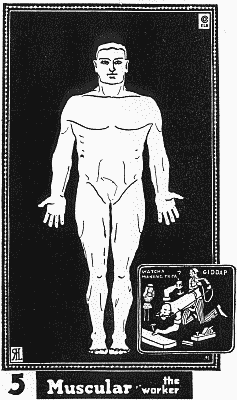
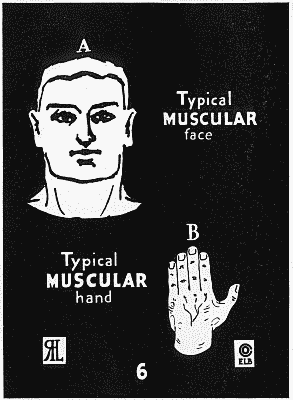
Recognising the type
Watch for forward motion. The Muscular leans toward the problem. They make eye contact at the relevant moment and not before. Their posture is loaded; even at rest they look like someone who is about to do something, because they are. They walk fast. They are unhurried about everything except waiting.
Linguistic markers. They prefer concrete nouns to abstract ones. They say the problem is where the Cerebral says the issue here. They give short answers. Where the Digestive softens a hard message and the Cerebral qualifies it, the Muscular delivers it — kindly when they are paying attention, bluntly otherwise. Their email is the shortest in the thread. They are not being curt; they are being efficient with the medium.
Behavioural markers. The Muscular finishes things. This is the most reliable single indicator. Other types finish things some of the time; the Muscular finishes things by default, and notices when they don’t, and is bothered by it. They are calm in physical crisis — the fire, the burst pipe, the medical episode — and faintly impatient in long meetings about long-term planning. They are the people who said it would take three weeks and it took three weeks.
Environmental markers. The Muscular’s space is practical. Tools where you can find them. Work surfaces clear. The kitchen is laid out for a person to cook in, not to look at. The garage, if there is one, is functional rather than decorative. They invest in good equipment for the work they do, often spending more than they should and less than they could, because the equipment is the thing.
III · StrengthsWhat the type does well
Closing power. The Muscular gets the work to done. Not nearly done, not done in spirit, not done pending the small remaining things — done. They start, they push through the middle that other types abandon, and they finish. They are valuable in proportion to the cost of unfinished work, which in most working environments is high.
Directness. The Muscular says the hard thing. Not cruelly, but plainly. People who work with them learn that a Muscular’s silence is more dangerous than their speech, because their speech contains feedback. They are the colleague you go to when you actually want to know whether the thing is working.
Calm under physical pressure. The Muscular is not braver than other types; they are differently calibrated. Where the Cerebral’s nervous system runs the threat through a slow analysis, the Muscular’s runs it through the muscles, and the muscles do something. This is invaluable in any setting where the cost of hesitation is high — surgery, military, sport, certain kinds of operations leadership.
Loyalty earned by delivery. The Muscular trusts the people who do what they said they would do. Once trust is established it is not easily disturbed. They are excellent long-cycle collaborators with people who can match their delivery cadence.
IV · VulnerabilitiesWhere the type fails
Impatience with strategy that hasn’t yet become tactic. The Muscular wants to begin; the planning meeting is in its third hour; the first plausible plan is already plenty good for them. They will sometimes ship the first plausible plan over the better plan that needed thirty more minutes of thinking. They know this about themselves and are not always able to stop themselves.
Bluntness that reads as unkindness. The Muscular under-codes for the emotional reception of their words. The Digestive who hears that part isn’t working hears criticism of the relationship. The Cerebral who hears it hears a mild factual claim. The Muscular meant the second; the Digestive heard the first; the conversation now needs repair the Muscular did not know was needed.
Difficulty with ambiguity, especially the kind that does not resolve. Where the Cerebral can hold a problem in its unresolved state for as long as needed, the Muscular wants the resolution now, and will manufacture one if necessary. This is a problem when the situation does not in fact admit of resolution yet — when the data is not yet in, when the dependency has not yet shipped, when the person needed for the decision has not yet thought it through.
Underestimating the work of feelings. The Muscular treats their own emotions as logistical events to be processed quickly and shelved, and tends to assume other people work the same way. They do not. The Muscular’s intimate relationships often improve markedly when they accept that some emotional events take three days to metabolise rather than thirty minutes.
Pushing through one cycle too long. The Muscular’s body is the asset that makes them what they are; they tend to use it as if it were inexhaustible. Knees, lower back, sleep debt. The injuries that catch up with Muscular types in their forties and fifties were nearly always avoidable in their twenties.
V · Vocational fitWhere the type thrives
Operations, trades, military, athletics, surgery, infrastructure, founder-as-operator, anything where the output is observable and the cycle is short enough that delivery is felt as delivery. Hands-on technical work. Manufacturing. Logistics. Cooking. Construction. The roles in any organisation that the rest of the organisation depends on without realising they depend on them.
They thrive in environments where the work product is an artefact you can point at — the building stood up, the patient came through, the season was won, the box shipped on the truck on Friday. They thrive with peers who match their delivery cadence and with managers who do not over-protect them from outcomes.
They struggle in long, abstract, low-cycle roles where success is judged by something other than the artefact: corporate strategy without operational tail, certain consulting cultures, certain academic environments. They suffer in roles where every artefact has to be re-justified through narrative before it is allowed to be the artefact.
VI · Health patternsWhat the body does
Stress shows in the Muscular as physical tension. Jaw, shoulders, lower back. They sleep through it longer than they should. They under-report fatigue. They are surprised by their own injuries. The body is doing more of the work of being them than they remember to credit it for.
The Muscular is disproportionately helped by hard physical work, even when their day job already supplies it — the kind that wears the body cleanly. They are disproportionately hurt by sedentary cognitive jobs without an outlet, because the system that wants to discharge does not get to. The cliché of the construction worker who retired and died within two years of stopping moving is not actually a cliché about Muscular types — it is partly a vascular story — but it carries a real signal.
Practical implications follow. Daily movement, ideally in the open air. Heavy work or load-bearing exercise rather than purely cardiovascular. Honest accounting of injury — I tweaked it last Tuesday is data, not noise. Sleep that is taken seriously, because the body that does the work needs it, and a tired Muscular makes the kind of small irritable decisions that compound through the team.
VII · ExamplesA few people who fit
- Theodore Roosevelt — Muscular by body and temperament across nearly every domain he turned to. The asthmatic boy who built himself into the rancher and the soldier; the writer who could not sit still.
- John Henry — folk-figure. Useful precisely because he is constructed: the Muscular as American myth, the body as the answer to the question, the cost of pushing past the warning signs.
How the type pairs
The Muscular’s most productive blends are with the Cerebral (the engineer-founder, the applied scientist) and the Skeletal (the master craftsperson, patient mastery). Both blends solve a problem the pure Muscular has: they extend the cycle. The Cerebral provides reasons that survive the second meeting; the Skeletal provides patience that survives the second decade.
With the Cerebral, the partnership is between question and execution. The Muscular asks when; the Cerebral asks why. The friction is between cycle lengths.
With the Circulatory, the blend produces the athletic performer, the charismatic operator. The friction is in finishing: the Muscular wants to finish the current thing; the Circulatory wants to start the next.
With the Digestive, the blend produces the relational executor. The Muscular’s directness softens; the Digestive’s avoidance has somewhere to go. Friction in tone, particularly under stress.
With the Skeletal, slow patient mastery. The pairing is among the most stable. Friction is rare, usually about pace.
With another Muscular, things get built. The risk is shared blindness to feelings that aren’t on the spec.
IX · Where the framework breaks downHonest limits for this type in particular
Two cautions for the Muscular specifically. First, physical competence is not exclusive to one body type. Many fine athletes are Cerebral or Skeletal in constitution; many strong, fast, capable people are not Muscular by temperament. The framework describes orientation — where attention goes — not capability. A Cerebral surgeon and a Muscular surgeon both operate; they think differently about what they are doing.
Second, the cultural reading of the Muscular type carries baggage. Older constitutional psychology read this type as masculine and equated the masculinity with virtue. The framework here makes no such claim. Muscular as a temperament is not gendered, not virtuous-by-default, and not opposed to thoughtfulness. It is a centre of gravity. It is one way of being built. The plumbing of the older theories is not part of what is being kept.
The framework as a whole has further limits. See Where this framework breaks down.