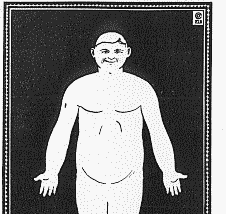
Digestive
The EnjoyerNiamh’s house always smells of something. On a winter Saturday it is a stew with a stick of cinnamon in it, and bread. On a summer one it is tomatoes and basil, butter, garlic. The neighbours’ children come and go through her kitchen as if the kitchen were a small public utility, which in some sense it is. Her own children, now grown, have learned that the only reliable place to talk about anything serious is her kitchen, between four and six on a weekend afternoon, with a glass of something open on the counter. They have learned this because they have tried other places and been disappointed.
She remembers what you do not eat. She remembers what your mother said to you in 2014. She does not bring it up; she just does not put it on the plate again, and asks, eight years later and unprompted, how your mother is. She has, in a quiet drawer behind the till of the small bookshop she has owned for thirty years, a list of every regular customer’s preferred reading on the back of a torn envelope. The list is not a marketing tool. She just likes knowing.
What the type orients toward
The Digestive orients toward enjoyment, connection, and feeding the people they love. Not in a sentimental sense, although there is sentiment. In a structural sense: the Digestive’s working assumption about a day is that the day is going well if the people in it are warm, fed, and not currently fighting. They notice when the room is cold and they fix it. They notice when the conversation has turned and someone has gone quiet, and they fix that too.
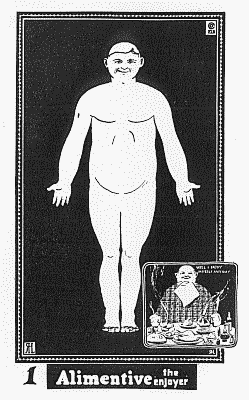
In the older constitutional language, this type was Sheldon’s viscerotonic, Benedict’s alimentive. The premise was that a person whose constitutional weight sat in the digestive system would orient toward problems handled by hospitality and pleasure, and away from the problems handled by competition and abstraction. The premise has not aged into a scientific theory. The pattern, however, is real and observable in any setting, and survives translation. Walk into any old neighbourhood pub, family-owned restaurant, or independent bookshop where the same person has been there for decades and you are very often looking at a Digestive. They are running the place the way they run anything — by feeding it.
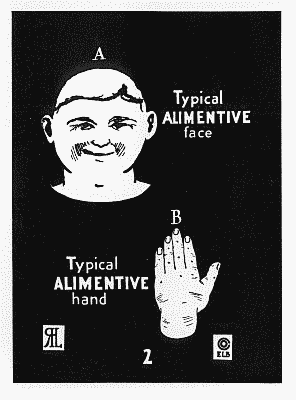
Recognising the type
The signal is not extroversion, though many Digestives are sociable; some are quiet, some are even shy. The signal is attention to the room. The Digestive notices when the energy has dropped. They notice when one person at the table has not been asked anything in twenty minutes. They notice when the host is overwhelmed and quietly take a tray of empties to the kitchen.
Linguistic markers. They are warm but not effusive. They use the names of the people they are speaking to more often than other types do. They ask questions where other types make statements. They remember things you said offhand — your sister’s birthday, the surgery your father had — that you do not remember telling them. They are, on average, the best listeners in the room, and they are listening in a particular way: not for information, exactly, but for what to do with it.
Behavioural markers. They feed people. This is the most reliable indicator. Not necessarily food — though often food — but care expressed materially, in service rendered, in the small adjustments made to a room that the room does not consciously register but nevertheless responds to. The Digestive at a dinner party is the one who got up four times before sitting down. The Digestive in a workplace is the one who knows whose mother is dying and which colleague needs to be left alone today.
Environmental markers. Comfortable. Generous. Warm is the word that recurs. There is good light. There is somewhere to sit that is not a hard chair. There is, very often, food within reach — not displayed, just present. The Digestive house contains evidence of children, animals, friends, parents — markers of a life that runs through the house rather than around it. Spaces are not curated for visual effect; they are configured for use.
III · StrengthsWhat the type does well
Genuine warmth that puts people at ease without performing it. The Digestive is the type for whom hospitality is not a learned skill, exactly — though there is craft in it — but a default orientation. They do not have to remind themselves to ask after your week. They want to know.
Hospitality as a form of intelligence. Reading the room is a Digestive specialty. They know when the conversation has turned, when the right person has not yet spoken, when the wrong person is about to be hurt. This is genuine social cognition; it is not a parlour trick. It is also, in many working environments, dramatically under-credited.
Forgiveness. The Digestive lets things slide off in a way other types cannot. Forget it is, as Benedict observed in 1921, a phrase you hear from this type more often than any other. It is not denial; it is metabolism. They process the slight, register it, and decline to keep paying interest on it for the rest of their lives. This is a real strength, and one the Cerebral and the Skeletal would do well to learn from.
Loyalty for decades. The Digestive’s circle of people — the colleagues, friends, family, regulars, neighbours — is unusually durable. They keep showing up. They send the card. They remember the anniversary. They are, in the long run, the ones still there.
An instinct for what a group actually needs in the moment. Where the Cerebral analyses the problem and the Muscular fixes it, the Digestive has often already adjusted the room so that the problem dissolves on the way to the kitchen.
IV · VulnerabilitiesWhere the type fails
Avoidance of conflict that calcifies into resentment. The Digestive does not want the row, and so they don’t have it. The thing that needed to be said does not get said. The conversation that needed to be had is deferred, then deferred again, until the situation has hardened past the point at which a conversation could fix it. The Digestive smiles. Underneath the smile, the resentment grows. This is the failure mode that hurts the Digestive most in long relationships — both intimate and professional.
A tendency to feed problems rather than solve them. Where the Muscular wants to fix the situation and the Cerebral wants to understand it, the Digestive often wants to comfort everyone in it, including comforting them out of fixing the underlying thing. The hungry person is fed before being asked why they are hungry.
Inertia. The comfortable chair has gravity. The Digestive can be reluctant to leave a situation that is no longer working because leaving it is uncomfortable, and discomfort is a category they instinctively avoid. This is true of jobs, relationships, neighbourhoods, social circles. They stay too long, sometimes by years.
Over-extending to please, then quietly running out. The Digestive says yes more often than they should and burns out in a particular slow way that is hard to detect from outside, because the burnout is silent. The cake still gets baked. The friend still gets driven to the airport. But the Digestive who has said yes one too many times for one too many years has lost something it will be hard to give back.
Health patterns tied to food-as-comfort rather than food-as-fuel. This is the pattern that gives the type its older clinical name. Stress lands in the digestive system; comfort lives in food; the two reinforce each other. This is a real and observable pattern, distinct from any moral claim about how anyone should eat.
V · Vocational fitWhere the type thrives
Hospitality at every scale, from independent restaurant to large hotel group. Food. Sales of relational products — services, complex purchases, anything where the relationship is the unit. Healthcare front-of-house: clinic managers, nursing leadership, GP receptionists, hospice care. HR done well — not policy HR, but the human kind. Community-building roles. Teaching, especially of younger children. Family-owned firms over generations.
They thrive in roles where the work product is the relationship between the institution and the people it serves. They thrive in environments that make space for warmth. They thrive in long careers in stable institutions where their accumulated knowledge of who is who and what they need compounds.
They struggle in cold-numbers analyst seats, in pure transactional sales, in roles that demand sustained delivery of hard news, and in environments where warmth is read as weakness — finance trading floors at their worst, certain consulting cultures, high-conflict legal practice.
VI · Health patternsWhat the body does
The Digestive carries a great deal of their stress in the gut. The contemporary picture from gut-brain research gives this old observation a more careful framing: there is a real bidirectional axis between intestinal and central nervous systems, and people whose system runs along that axis particularly strongly will feel emotional events as digestive events, and digestive events as mood events. The 1921 framing of this was crude. The pattern, in modern terms, is not.
Disproportionately helped by regular meals, walking, and time with people they love. Disproportionately hurt by isolation, irregular eating, and the kind of stress that can’t be shared with anyone. Sleep is usually fine when the relational world is fine; sleep deteriorates when relationships do.
Practical implications: the Digestive is the type for whom the social prescription is medicine, not nicety. Long lunches with friends are not a luxury; they are a real input to the system that keeps them well. Daily walking, particularly walking that ends somewhere with food and other people, runs along the constitutional grain.
VII · ExamplesA few people who fit
- Julia Child — the Digestive in undiluted form. The build, the kitchen, the warmth, the durability of the public love for her. The work was also serious; the warmth did not preclude rigour.
- Mary Berry — late-career television persona but the pattern is clear in the public record: the calm warmth, the attention to the people in the room, the long durable career on the back of being warm and excellent at the same time.
- Sam Gamgee (Tolkien) — fictional. Useful because the figure was constructed coherently: the garden, the cooking, the loyalty for decades, the forgetting of slights.
How the type pairs
The Digestive’s most natural blends are with the Muscular (the relational executor — runs the family firm, the contractor with the loyal client list, the warm operations leader) and with the Cerebral (the gentle systems thinker — the GP who actually listens, the senior teacher, the mediator).
With the Muscular, the partnership is between warmth and delivery. The Digestive softens the Muscular’s edges; the Muscular gives the Digestive’s warmth a delivery system. Friction lives in the difference between feeding people and finishing things.
With the Cerebral, an unusually gentle blend. The Digestive looks after the body the Cerebral keeps forgetting. The Cerebral provides the framework the Digestive doesn’t need but enjoys. Friction at decision-time, when warmth wants harmony and abstraction wants the right answer.
With the Circulatory, the blend produces warmth at scale — the host of the famous party, the hospitality magnate. Friction in pace: the Digestive wants people to stay; the Circulatory wants to take them somewhere else.
With the Skeletal, the friction is on temperature. The Digestive reads the Skeletal’s reserve as coldness; the Skeletal reads the Digestive’s warmth as overwhelm. Workable when both parties name the gap directly. Often a long, quiet partnership once the temperature is set.
With another Digestive, two Digestives make a household. The risk is mutual avoidance of any conflict that would clarify the future.
IX · Where the framework breaks downHonest limits for this type in particular
Two cautions for the Digestive in particular. First, warmth is not unique to a body type. Many people who are not constitutionally Digestive are kind, generous, attentive hosts. Reading the type as the warm type is unfair to everyone else and unflattering to Digestives, whose warmth is one feature among many.
Second, the older clinical descriptions of this type carried unkind freight: the fat people who forget, in Benedict’s phrase. The framework here does not make claims about body composition. The constitutional type describes orientation — where attention goes, what one notices first, what one is drawn to. Bodies of every shape carry this temperament, and Digestive temperaments live in bodies of every shape. The 1921 plumbing has been left where it was.
The framework as a whole has further limits. See Where this framework breaks down.