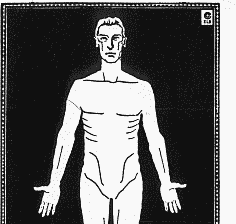
Skeletal
The StayerBritta has been a partner in the same firm for nineteen years. The firm has been through three managing partners, two recessions, and one near-merger she quietly killed because she did not believe the numbers. She has the office at the end of the corridor with the door usually closed and a single houseplant that has been alive for the entirety of her tenure. Junior associates are warned, mildly, not to be put off by her — she is not unfriendly, exactly, but she does not warm up on schedule. By the second year of working with her you understand that she is on your side; by the fifth you understand that being on her side is not a transient state.
She rereads the same three writers — one philosopher, one nineteenth-century novelist, one historian — once a decade. She has had the same haircut for twenty-eight years. The car is good and old. The marriage is good and old. The friendships are good and old. She gives advice that is usually some version of wait. The advice is usually right.
What the type orients toward
The Skeletal orients toward endurance. The long horizon is the default working surface. They make decisions at a scale of years, sometimes decades. They are the calm ones in a crisis, not because they are unmoved by it — they are moved — but because the crisis is less large to them than it appears to people whose horizon is shorter. They have, structurally, more time in their head than other types do.
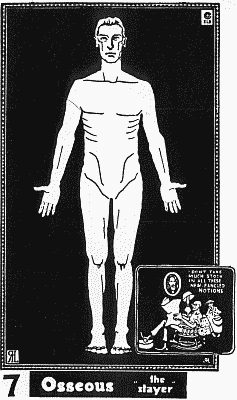
In the older constitutional language, this type was Sheldon’s ectomorphic rather than the cerebrotonic — though the two were often conflated — and Benedict’s osseous. The premise was that a person whose constitutional weight sat in the bone and connective frame would orient toward problems handled by patience and structure, and away from the problems handled by hospitality or impulse. The premise has not aged into a scientific theory. The pattern, however, is real and observable, and it survives translation. The Skeletal is the partner who outlasts the cycle; the founder who is still there ten years after the noisier founders have moved on; the teacher whose name is on the school after they have gone.
Recognising the type
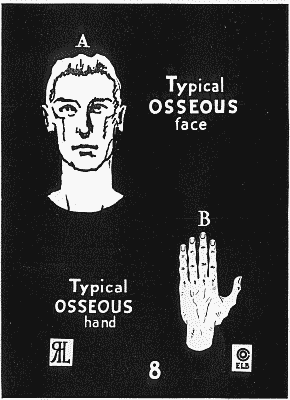
Watch for constancy. The Skeletal is the same on Tuesday as on Monday. They have one or two registers and one or two volumes. They do not run hot when other types run hot, and they do not run cold when other types run warm. The room will sometimes mistake this for indifference; the room is usually wrong.
Linguistic markers. They are economical with words. They mean what they say. They use the past tense more than other types, particularly the long past tense — we tried that in 2011 — and they use it without nostalgia. They give specific answers when they have them and explicit silence when they do not. They will say I don’t know yet and not feel any pressure to fill the gap.
Behavioural markers. They keep things. The car they have driven for fifteen years; the watch their father gave them; the friend they have had since they were eleven. Their possessions are old, well-made, and few. They do not hurry. They are unimpressed by the fashionable framing of a problem and unimpressed by the urgency around it; they will, three months later, often turn out to have been calibrated correctly.
Environmental markers. Spare. Ordered. Quiet is the word that recurs. The Skeletal house is not minimalist as an aesthetic; it is empty because the things they did not need are not there. There is good wood. There is good light. There are few decorative gestures, and the few are durable — the chair that was their grandmother’s, the rug that has been there for thirty years, the heavy table that will outlast all of them.
III · StrengthsWhat the type does well
Patience as a structural feature. Where other types summon patience as an act of will, the Skeletal has it the way other types have height. They can sit with a problem, a difficult colleague, a slow-moving institution, a long-term plan, without losing their grip on it. This is unglamorous. It is also the rarest temperamental gift the framework describes, because it does not produce visible work product week to week, which means it gets noticed by other people only at the scale of years.
Steadiness that anchors groups under pressure. In a crisis, the Skeletal becomes more, not less, themselves. The voice does not rise; the pace does not change; the next sentence is the next sentence. People around them often report a kind of coming-into-focus when the Skeletal speaks. They are valuable in proportion to the stakes of the situation, and most valuable when the situation is the stakes.
Excellent judgement of long-term risk. The Skeletal sees, more easily than other types, the second- and third-order consequences of a decision. They have lived through enough cycles to recognise the shape of one before it has finished forming. They are the people who said in 2007 that the housing market was a problem; they are the people who said in 2019 that the business model was thin.
Quiet authority. The Skeletal is rarely the loudest in the room and often, by the end of the conversation, the most listened to. Their authority is not performed; it accrues from consistent, observable judgement over time. People learn that what they say is worth waiting for.
The ability to hold a position without needing it acknowledged. The Skeletal is content to be right unaccompanied. They do not require the room’s recognition to feel that the position was correct. This makes them excellent at certain kinds of leadership — particularly the sort that has to make unpopular calls — and excellent at solitary work that does not pay off for years.
IV · VulnerabilitiesWhere the type fails
Reserve mistaken for indifference. The Skeletal does not warm up on schedule. They love their people, and their people sometimes do not know it for years longer than would have been useful. The Digestive partner reads the silence as withdrawal; the Circulatory friend reads it as cooling; the child reads it as absence. The Skeletal often does not know the reading is happening, because in their own experience they are simply being themselves.
Slowness to revise when revision is the right move. The same patience that is a strength becomes a weakness when the situation has actually changed. The Skeletal can be three years late to recognising that the model has broken, the relationship has shifted, the strategy has stopped working. We tried that and it didn’t work is a Skeletal sentence about a thing they tried in a different decade.
Difficulty asking for help. The Skeletal will suffer through a problem they could have solved with a phone call, because asking would mean admitting they cannot do the thing alone. They are vulnerable to the long-running unspoken difficulty — the marriage that needed therapy fifteen years ago, the back that needed surgery five years ago, the partner who needed to be told. They underweight their own need.
Rigidity hardening into stubbornness. I don’t change my mind is a real Skeletal vice, distinct from the strength of I hold a position. There are people who hold positions and revise them when the evidence comes in; there are people who hold positions and treat the position as identity. The second is the failure mode.
Under-expression of warmth. The Skeletal often loves quietly. The cost of the quiet is that the loved person sometimes did not know.
V · Vocational fitWhere the type thrives
Long-cycle work where the artefact is years away. Research. Judiciary. Architecture in the long sense — the building, the institution, the field. Infrastructure. Institutional leadership. Mastered crafts: instrument-making, conservation, scholarship. Forestry. Roles where the right call last year is more important than the busy call this morning.
They thrive in stable institutions that protect their working pace, in apprenticeship cultures that compound their judgement over decades, and with peers whose horizon resembles theirs. They thrive in solo work and in small partnerships of similarly patient people.
They struggle in fast-cycle, performative, high-novelty roles. They struggle in environments that punish silence. They struggle in roles that require a public emotional register they cannot sustainably produce. They suffer in cultures that read patience as inaction.
VI · Health patternsWhat the body does
Stress in the Skeletal shows as withdrawal and rumination. Where the Digestive feeds the stress, the Muscular discharges it physically, the Circulatory burns it off in motion, the Cerebral chews it cognitively, the Skeletal holds it. The holding is internal. From the outside, sometimes nothing is visible. Inside, the system is paying.
The body’s structural loads tell the story over time. Joints, lower back, posture. The Skeletal carries weight differently than other types and tends to carry it in the same configuration for decades, which is good for repeatability and bad for whichever parts of the system bear the load.
Practical implications: sustained gentle movement is medicine. Walking. Swimming. Long single-pace activity. The Skeletal does not need to be persuaded to do these — they do them already — but they should be taken seriously as inputs to the system, not abandoned when the schedule tightens. Relationships that do not require constant re-warming protect the Skeletal’s energy; relationships that demand constant warmth deplete it. Both kinds of relationship are worth having; the Skeletal needs to know which is which.
VII · ExamplesA few people who fit
- Angela Merkel — the Skeletal in political form. The patience, the long-cycle judgement, the immovable steadiness, the under-expression of warmth, the readiness to hold a position without requiring acknowledgement.
- George Smiley (le Carré) — fictional, again useful. The reserve, the long horizon, the unobtrusive moral seriousness, the willingness to be wrong-looking now and right-looking later.
- Hayao Miyazaki — the Skeletal as artist. Decades on the same problem, the same studio, the same hand-drawn methods, the disinclination to perform.
- Marilynne Robinson — the Skeletal as novelist. The slow books, the stubborn intellectual independence, the tendency to be eight years ahead of where the conversation went.
How the type pairs
The Skeletal’s strongest blends are with the Muscular (the master craftsperson, patient hands) and the Cerebral (the institutional thinker, the judiciary mind).
With the Muscular, slow patient mastery. Both parties are willing to do the same thing for thirty years. Friction is rare and is usually about pace.
With the Cerebral, the institutional thinker. Long horizons and careful argument. Judges, scholars, founders of slow-burning institutions. Friction when reserve meets abstraction and neither party will say what they want.
With the Digestive, the temperature problem. Workable, often beautifully so, when both parties name it.
With the Circulatory, the hardest natural pairing. Stillness and stimulus pull in opposite directions. Workable only when both parties have done individual work.
With another Skeletal, two Skeletals settle into a deeply stable rhythm. The risk is that nothing ever changes, including the things that should.
IX · Where the framework breaks downHonest limits for this type in particular
Two cautions for the Skeletal specifically. First, endurance and patience are not body-type properties. Plenty of patient people are not constitutionally Skeletal; plenty of Skeletals are impatient when the problem is small. The framework describes orientation, not virtue. Patience and Skeletal are not synonyms.
Second, the older constitutional theories drifted close to a moral reading of this type as aristocratic, refined, higher. None of that is here. The Skeletal is one of five orientations. It is not above the others. It is not, in itself, a more serious or more moral way to be a person. Be wary of anyone — including yourself — who reads it that way.
The framework as a whole has further limits. See Where this framework breaks down.