What each type holds central.
Constitutional type predicts orientation: where attention goes, what counts as a good day, what registers as a betrayal. The same eight values mean different things to different types, and rank in different orders. This page reads two ways — as a comparative scorecard, and as a ranked top-six per type.
| Value | Digestive | Circulatory | Muscular | Skeletal | Cerebral |
|---|---|---|---|---|---|
| Belonging | 5 | 3 | 3 | 3 | 2 |
| Stimulus | 2 | 5 | 3 | 1 | 3 |
| Competence | 3 | 3 | 5 | 4 | 4 |
| Endurance | 3 | 2 | 4 | 5 | 4 |
| Truth | 2 | 3 | 3 | 4 | 5 |
| Pleasure | 5 | 4 | 2 | 2 | 2 |
| Freedom | 2 | 5 | 3 | 4 | 4 |
| Order | 3 | 1 | 4 | 5 | 3 |
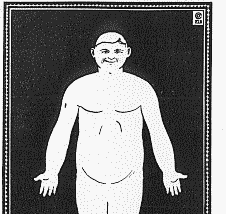
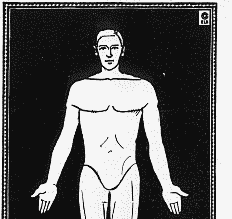
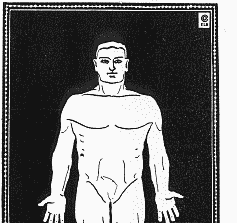
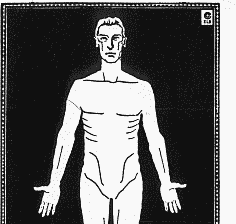

Ranked top six per type
Digestive
- 1 Belonging. Being in the circle of people who matter to you, and keeping the circle warm.
- 2 Pleasure. Real, sensory, shared. Not as indulgence but as evidence the day is working.
- 3 Loyalty. Showing up over decades; remembering the small things that mattered.
- 4 Hospitality. Care expressed materially — the room arranged, the table set, the guest met.
- 5 Continuity. The household, the neighbourhood, the long-running relationship.
- 6 Forgiveness. Letting things slide off rather than carrying them for years.
Circulatory
- 1 Stimulus. The live moment. Novelty as oxygen rather than as luxury.
- 2 Freedom. The right to leave, to start again, to choose differently this week.
- 3 Presence. Being met, being seen, being chosen — repeatedly, in the room.
- 4 Risk. The stake makes the moment real; flat security is a kind of slow harm.
- 5 Recognition. The audience matters — not for vanity, but as a feedback loop on whether the work was real.
- 6 Speed. The thing happens this week or it doesn't happen.
Muscular
- 1 Competence. Doing the thing well; output as the reliable measure of self-worth.
- 2 Delivery. Finishing what was started, on the timeline that was set.
- 3 Directness. Plain language, plain action, no ornament.
- 4 Loyalty (earned). Trust accrued by behaviour, not declared in advance.
- 5 Strength. Physical and structural — what you can carry, what you can withstand.
- 6 Fairness. An even reckoning; the work shows, the credit lands.
Skeletal
- 1 Endurance. Constancy as the structural feature, not a virtue summoned for the occasion.
- 2 Integrity. The same in every room; a self that does not need to perform itself.
- 3 Independence. The right to think, decide, and live without the room being told.
- 4 Stewardship. Holding something — institution, relationship, craft — across decades.
- 5 Order. Quiet, predictable rhythm; the right amount of chaos is none.
- 6 Reserve. Privacy of feeling; warmth shown by being there, not by being said.
Cerebral
- 1 Truth. How the thing actually works, as best as can be known.
- 2 Depth. Sustained attention on what most rooms have moved past.
- 3 Autonomy. The room and the time to think, without interruption.
- 4 Honesty. Scrupulous about what is and isn't yet known; allergic to false confidence.
- 5 Originality. Arriving at conclusions by ordinary work; not for novelty's sake.
- 6 Solitude. The medium of the work; not loneliness, but the conditions under which thought happens.
How to read this
Two cautions. First, every type holds every value to some degree — the rankings describe the centre of gravity of attention, not what each type is allowed to care about. Second, the comparative table is a sketch, not a measurement: it makes the structure visible at a glance, but the cells were written by a human reading the framework, not derived from a study.
Use this page as a crib for the difference between the same word in two mouths: loyalty means *I will keep showing up* to a Skeletal and *I will keep feeding you* to a Digestive; both are the value, both are different verbs.